
Live Quran lessons from home
Online Quran Classes with Live Teachers for Kids and Adults in the USA
The Sanad Academy teaches live, private Quran lessons over video, so you can learn from home anywhere in the United States. You meet a certified teacher, practice reading with correct Tajweed, and get corrections as you go. Tajweed means the rules for saying each Arabic letter the right way. Your first class is free.
Your first class is free.
Certified teachers
Live and private
All 4 US time zones
Free trial class
No payment, and no plan to sign up for.
1-on-1
Private lessons, no crowded group calls
Male or female
teachers, you choose who teaches
4
US time zones, early morning to late evening
Monthly
progress report and a short test
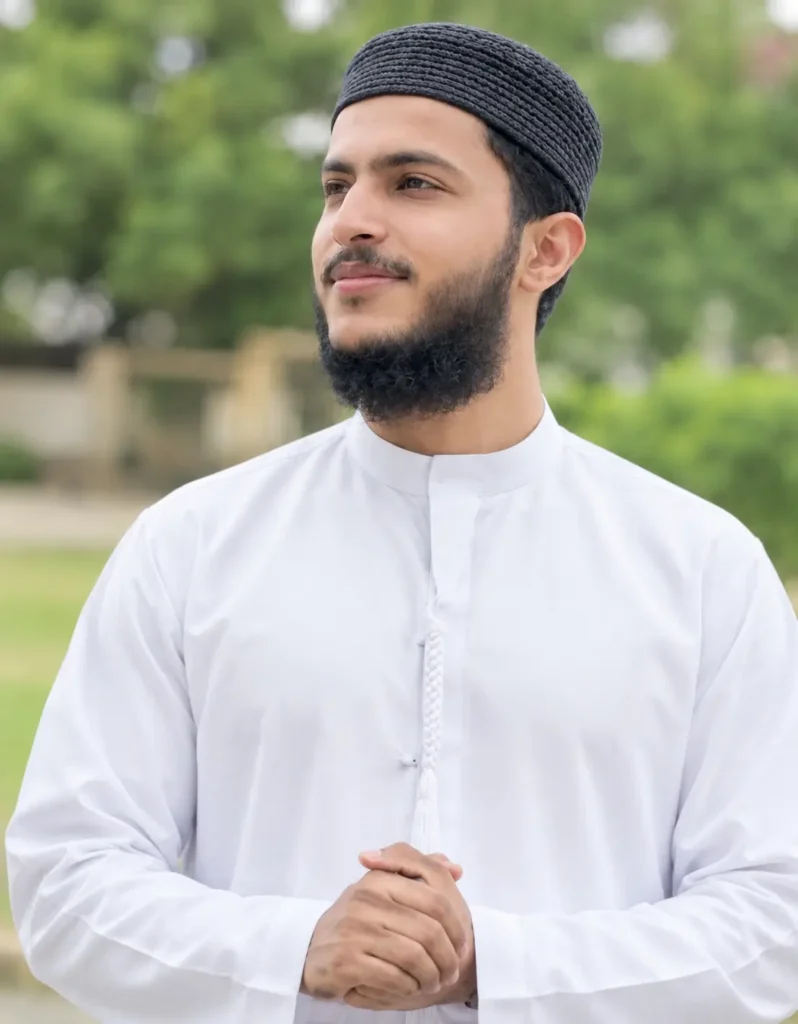
Our teachers
Hold ijazah and teach in clear English
What does “Sanad” mean, and who are we?
A sanad is the unbroken chain of teachers that links a student’s recitation back to the Prophet Muhammad, peace be upon him. We chose it as our name because we believe the Quran is best learned from a real teacher who listens to you, not from an app alone.
The Sanad Academy is an online Quran school for families and adults across the USA. We teach young children, teens, adults and new Muslims. Our teachers hold ijazah, a certificate showing that a qualified teacher approved them to teach the Quran. They teach in clear English and can switch to Arabic or Urdu when a student needs it.
English
Arabic
Urdu
Our goal is simple. You should read the Quran correctly and feel confident doing it, long after the first few lessons.
How do online Quran classes work?
You book a free trial, take a short level check, get matched with a teacher, and choose a weekly schedule. Classes happen on a video call. Your teacher listens as you recite and corrects you right away. You get short practice for the days between lessons.
Here are the steps, one at a time.
1
Book your free trial.
Fill in a short form with your name, your child’s age if the class is for a child, and the times that suit you. It takes about two minutes.
2
Do a level check.
In the trial class, the teacher listens to you read. A complete beginner is welcome. So is someone who reads slowly and wants better pronunciation.
3
Get matched and pick your times.
We choose a teacher based on your level, your age and whether you prefer a male or female teacher. We schedule classes in Eastern, Central, Mountain and Pacific time. A family in Houston and a family in Los Angeles can both get an after school slot.
4
Start learning.
Most students take two to five classes a week. Every month you get a progress report and a short test result.
You don’t need much at home.
A laptop or tablet, steady internet, headphones and a quiet corner are enough. A printed copy of the Quran helps, though your teacher can also share pages on screen. Younger kids do best with a parent nearby for the first few weeks.
30 min
Most children take 30 minute classes.
45 or 60 min
Adults often choose 45 or 60 minutes.
What happens in a typical online Quran class?
A typical 30 minute class starts with a quick review of the last lesson, moves on to something new, and ends with a short recap and homework. Your teacher listens closely and repeats each part as many times as you need.
01
A quick review of the last lesson
02
Something new
03
A short recap and homework
Qaida class · child
In a Qaida class, a child might review last week’s letters for five minutes, then spend the rest of the class on new letters and short words read aloud.
Tajweed class · adult
An adult in a Tajweed class might read one page while the teacher stops them to fix a single sound.
10 min
Between classes, you get a small task, like reading one line ten times or listening to a short audio of your teacher’s recitation. It takes about 10 minutes a day.
Which Quran courses can I take online?
We offer Noorani Qaida, Quran reading, Tajweed, Hifz, Tafseer, Ten Qirat and Ijazah. We also teach Arabic and basic Islamic studies. Pick the online Quran courses that match your level today, and add another whenever you’re ready. Each one has a clear starting point and a clear goal.
01
Noorani Qaida for beginners
Noorani Qaida is the first step for anyone who can’t read Arabic yet. It teaches the letters, their sounds, and how to join them into words. Most kids finish it in two to four months with three or four classes a week. Adults often move faster.
02
Quran reading (Nazra)
Nazra means reading the Quran from the page. After Qaida, you read with a teacher who fixes mistakes the moment they happen. Most students start with a few lines, then build up to a full page in a single class.
03
Tajweed course
Tajweed teaches where each letter comes from in your mouth and throat, how long to hold a sound, and when to pause. We start it in the very first lesson, so you don’t build habits you’ll have to fix later. Advanced students practice rules for merging and hiding sounds, called Idgham and Ikhfa.
04
Hifz, or Quran memorization
Hifz is memorizing the Quran by heart. We begin with short surahs from Juz Amma, the last section of the Quran. Then we build a daily plan for new lines and revision. A full Hifz usually takes three to five years at a steady pace, and revision matters as much as new pages.
05
Ten Qirat
Qirat are the authentic styles of reciting the Quran. Most people in the USA hear Hafs, while Warsh is common in North and West Africa. Our Ten Qirat course is for advanced students who already recite with strong Tajweed.
06
Tafseer and Quran translation
Tafseer explains the meaning of the Quran. We read the translation and the background of each verse in English, so you understand what you recite. Many adults add this once they read fluently, and it gives their daily recitation more weight.
07
Ijazah
Ijazah is a certificate that says you’ve recited the Quran to a qualified teacher and can pass it on through an unbroken chain. Students usually reach it after Hifz or full reading with advanced Tajweed. It’s the course our name comes from.
08
Arabic and Islamic studies
Our Arabic classes teach reading, speaking and Quran vocabulary to people who don’t speak Arabic at home. Islamic studies covers wudu (the washing before prayer), Salah (the five daily prayers), daily duas and the basics of faith. Parents often add these to a child’s Quran classes.
What age should a child start online Quran classes?
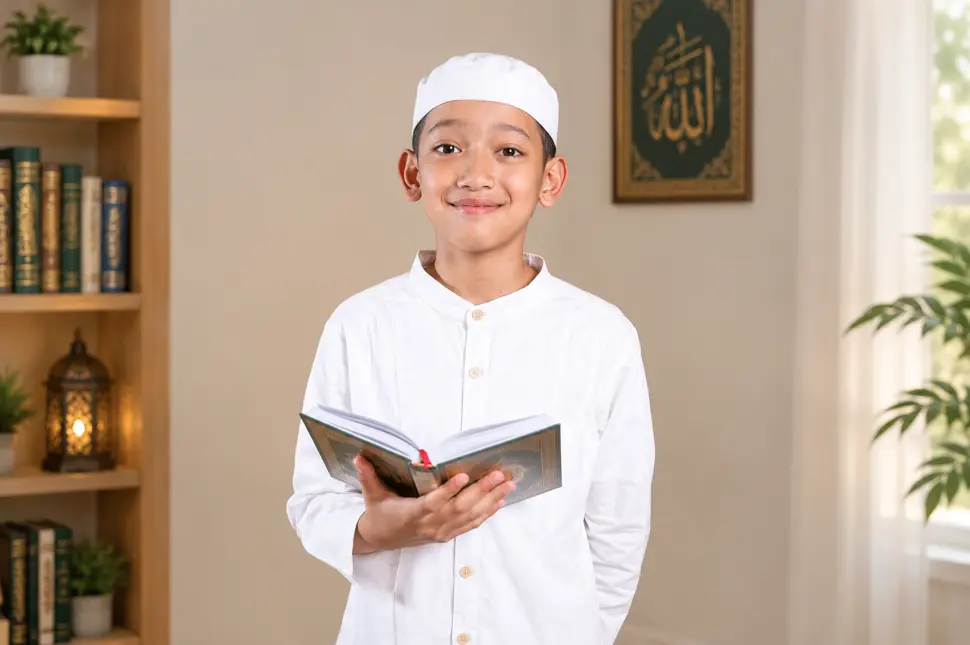
Most children are ready between ages 4 and 6. A child needs to sit still for about 15 minutes and follow simple directions. Older kids can start too. Many begin at 8 or 10 and catch up fast with regular practice.
Young children learn through short, playful lessons. Teachers use letter games, repeat after me drills and plenty of praise. A class for a kindergartner looks very different from one for a middle schooler.
What are the benefits of online Quran classes for kids?
Kids learn at home, with no driving after school. They get a teacher’s full attention, so shy children often speak up more. Parents can listen in and see real progress. A daily class also builds a habit that carries into other parts of life.
Parents often start practicing alongside their kids, and the Quran becomes part of the family routine.
Can adults and new Muslims learn the Quran from zero?
Yes. Adults can learn the Arabic letters and recite with Tajweed from scratch. Most adults who practice 15 minutes a day can read simple verses in about three to four months. Age isn’t a barrier, and neither is being new to Islam.
15 min a day
is enough for most adults to read simple verses in about three to four months.
Private classes
Many adults worry they’re too old or too embarrassed to start. Your teacher has seen it all, and classes are private. Nobody else hears you.
New Muslims
New Muslims and people who don’t speak Arabic often begin with transliteration, which means Arabic sounds written in English letters. We phase it out slowly as your reading improves.
Sisters
Sisters can choose a female teacher. Many women and girls feel more at ease that way, and we match you with one every time you ask.
What is Tajweed, and do you really need it?
Tajweed is the set of rules for reciting the Quran the way it was taught. It covers where each sound comes from and how long to hold it. You need it because a small change in a sound can change the meaning of a word.
Learning Tajweed early is far easier than fixing mistakes after years of reciting the wrong way. That’s why our teachers correct pronunciation from your first class.
qalb
heart
vs
kalb
dog
Try saying qalb and kalb. One means heart. The other means dog. The only difference is where the first sound starts in your mouth.
Why do families choose The Sanad Academy?
Families choose us for private lessons, a choice of male or female teachers and clear proof of progress each month, so parents always know where their child stands. We also keep prices simple and class times flexible. Here’s what that looks like in practice.
01
Private lessons
One student and one teacher. No crowded group calls.
02
Male and female teachers
You choose who teaches you or your child.
03
Backup teachers
If your teacher is sick or traveling, another one covers the class, so nobody loses a week.
04
Monthly progress
You get a short test and a written report each month, plus a parent meeting if you’d like one.
05
Flexible times
We hold classes from early morning to late evening in all four US time zones, including weekends.
06
Certificates
Students receive a certificate when they finish a course level.
07
Clear prices
You see the full price before you pay, and you can pay monthly by card or PayPal.
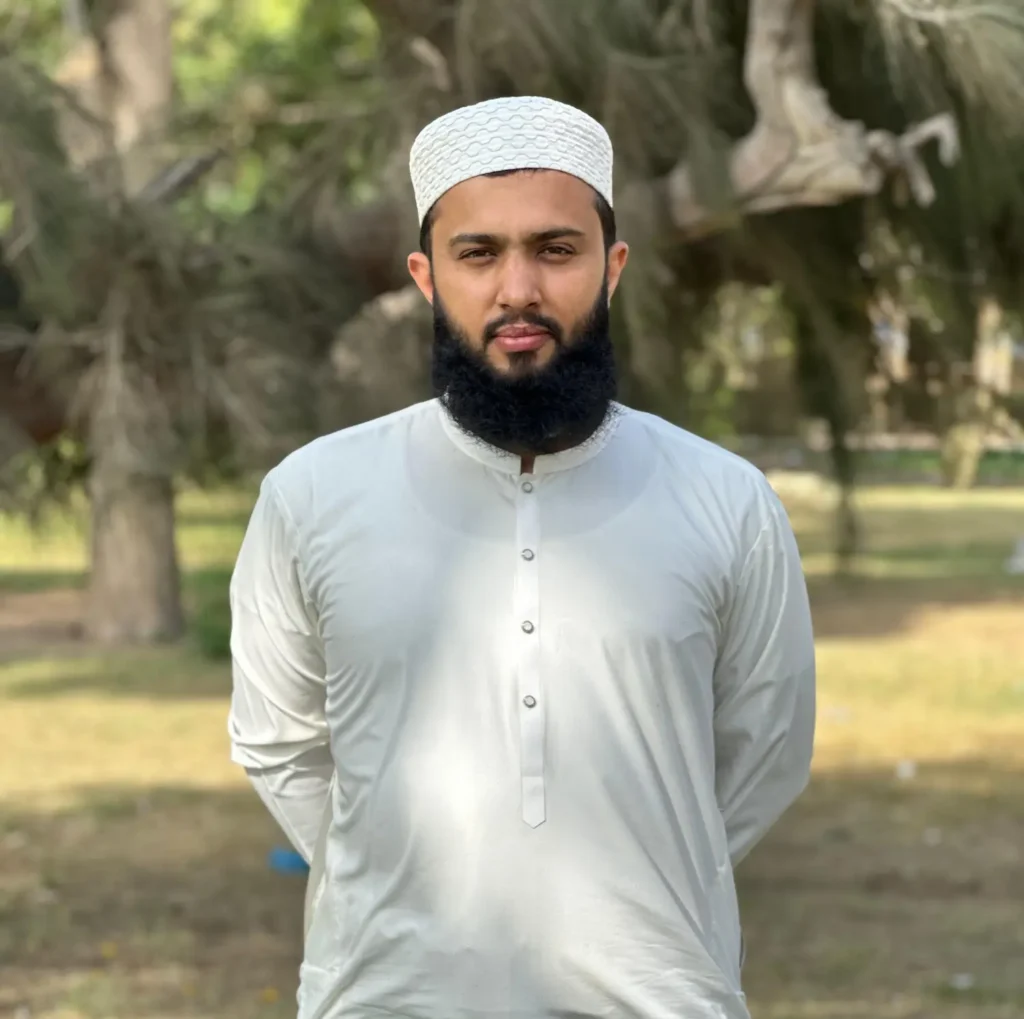
How do we choose our teachers?
Every teacher holds ijazah or equal training, passes a recitation test, and teaches a sample lesson while our team watches. We also check how patient they are and how well they work with children before they ever meet a student.
✓
Ijazah or equal training
✓
Passes a recitation test
✓
Teaches a sample lesson while our team watches
Knowing the Quran isn’t the same as teaching it. A great reciter who can’t explain a rule to a first grader won’t help much. We look for patience, clear English and the skill to keep a child interested.
If the match doesn’t feel right after a few classes, tell us. We’ll find you a better one.
How do we keep children safe and protect your privacy?
Parents can sit in on any class. Every teacher is screened before teaching, and we collect only the details we need to schedule lessons. We don’t share your information, and we don’t record lessons unless a parent asks. Your family’s privacy comes first.
Is learning the Quran online as good as learning at a mosque?
For many families, yes. A Quran course online gives you the same close correction as a local class, without the drive. The best choice depends on your schedule, where you live and how your child learns. Both options can work well.
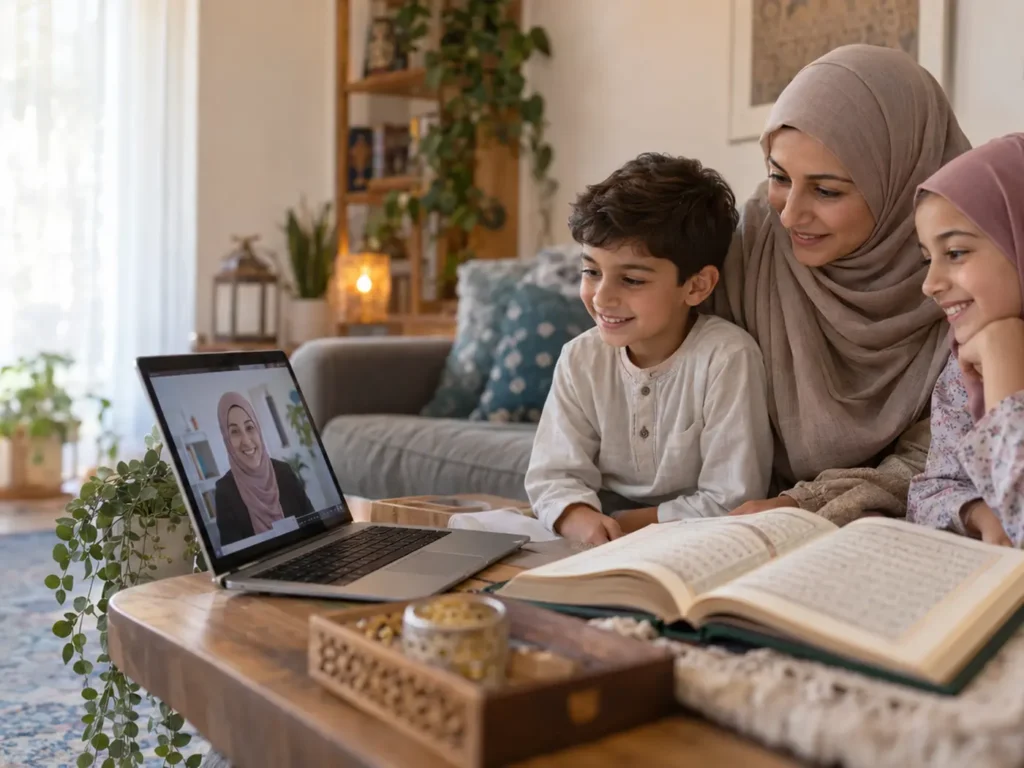
Online
Online works best when the nearest qualified teacher is a long drive away, or when traffic or winter weather keeps causing missed classes. A family in the Dallas suburbs might spend an hour in the car each way. Online turns that into 30 minutes of real learning.
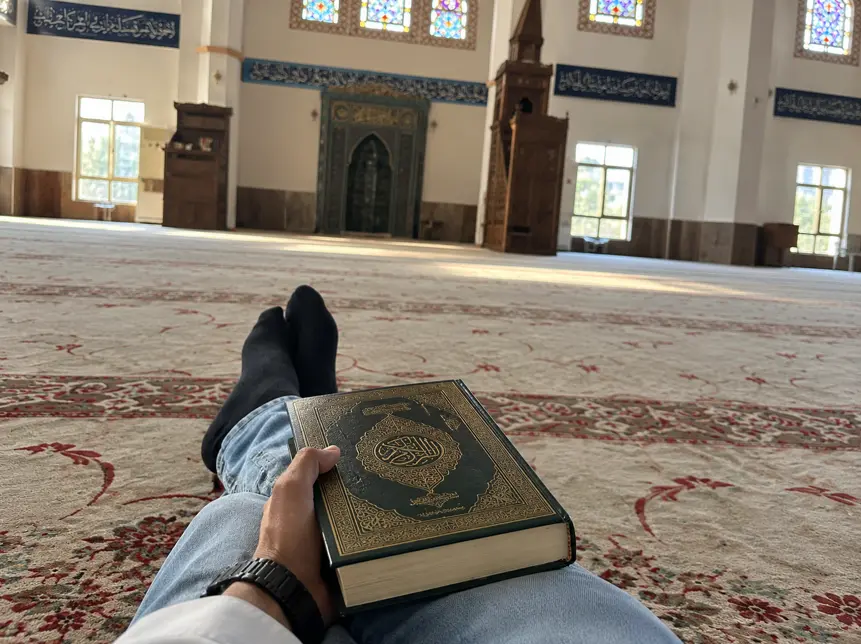
At a mosque
A mosque gives you community and friendships in person. Some families do both, with Quran classes online on weekdays and mosque programs on weekends.
Where can you join from?
You can join from anywhere in the USA with an internet connection. Whether you live in Brooklyn or Queens, near Sugar Land outside Houston, in Dearborn, in Irving near Dallas or in a small town with no Islamic center nearby, your teacher appears on your screen at class time.
Brooklyn
Queens
Sugar Land
Dearborn
Irving
Small towns
That matters most for families in smaller towns, where a qualified Quran teacher may be an hour away.
Eastern
Central
Mountain
Pacific
How much do online Quran classes cost in the USA?
$40–$110
a month, depending on classes per week
Most academies in the USA charge between $30 and $100 a month. At The Sanad Academy, plans run from about $40 to $110 a month, depending on how many classes you take each week. Prices are listed in US dollars.
Class length and weekly frequency set the price. Two 30 minute classes a week sit at the lower end. Five classes a week sit at the higher end.
Siblings can share a schedule, so ask us about family pricing. You’ll see the full price before you pay, with no hidden fees.
Be careful with offers around $10 a month. They often mean large group classes or a different teacher every week, and that makes progress slow.
How does the free trial class work?
30 min
real lesson, real teacher
The free trial is a real 30 minute lesson with a real teacher. You’ll recite, get corrections and ask questions. You don’t pay anything, and you’re not locked into a plan afterward. Most people know within one class whether the teacher is a good fit.
Book Your Free Trial Class →How can you judge any free Quran trial class?
Check four things.
1
Does the teacher share real credentials?
2
Is the class live, with a person who listens and corrects you?
3
Is there a clear plan from Qaida to fluent reading?
4
Are the prices honest and easy to find?
Use this list for any academy, including ours.
Free videos and apps are good for extra practice, but they can’t hear you. A live teacher catches mistakes as they happen, and that’s where most progress comes from.
How can you make faster progress with your Quran lessons?
Practice a little every day, at the same time and in the same quiet spot. Ten to fifteen minutes daily beats one long session on the weekend. Revise old lessons before you start new ones. Small habits make the biggest difference.
10–15 min
every day beats one long session on the weekend.
A Quran class online also works much better when your teacher can hear you clearly, so use headphones and sit close to the microphone.
Here are the mistakes we see most often.
Mistake 1
Starting Hifz too early.
Weak reading makes memorizing slower and harder.
Mistake 2
Skipping revision.
New pages fade quickly without regular review.
Mistake 3
Switching teachers often.
Each teacher has a different method, and changing every few weeks slows you down.
Mistake 4
Practicing in a noisy room.
Your teacher can’t catch small mistakes over background noise.
Plan ahead for Ramadan. Rajab and Sha’ban are the two months before it, and starting then gives you time to read more of the Quran with confidence when Ramadan arrives.
Frequently asked questions
How do I learn the Quran online from scratch?
Start with Noorani Qaida, which teaches the Arabic letters and sounds. Then move to reading with a teacher, and add Tajweed from the beginning. Book a free trial and the teacher will place you at the right level.
Is the free trial really free?
Yes. The 30 minute trial costs nothing, and you don’t have to sign up afterward.
How long is each class?
Most kids take 30 minutes. Adults usually choose 45 or 60 minutes. You can change the length as your schedule changes.
Can I choose a female teacher?
Yes. We have male and female teachers, and you pick who you’re more comfortable with. Many sisters and girls choose a female teacher.
Can I pick my own class times?
Yes. We teach in Eastern, Central, Mountain and Pacific time, from early morning to late evening, including weekends.
How long does it take to read the Quran fluently?
Most students who practice most days read with basic Tajweed in six to twelve months. It depends on your age, your starting point and how often you practice.
What are the best online Quran classes for beginners?
The best online Quran classes for beginners use a live teacher, start with Noorani Qaida and give you a free trial first. Look for clear prices and teachers who can show their credentials.
Your first lesson is free
Book your free trial class
Fill in the short form on this page, and we’ll reply within one business day with your teacher and your class times. Your first lesson is free.
Book Your Free Trial Class →