
Quran course · Beginner
Noorani Qaida Online Classes for Kids and Adults
Noorani Qaida is the first book for learning to read the Quran. It teaches Arabic letters, vowel marks and the basic rules of Tajweed, one small step at a time. The Sanad Academy teaches it online, live and one on one, to children from age 4 and to adults. Your first 30 minute class is free.
Your first 30 minute class is free.
Arabic letters
Vowel marks
Basic Tajweed
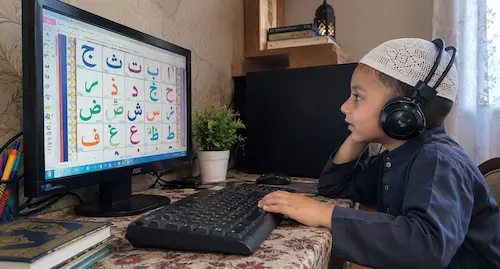
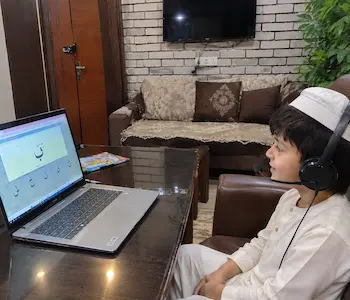
Age 4+
Children from age 4, and adults. Live and one on one.
What is Noorani Qaida?
Noorani Qaida is a beginner’s book for learning to read the Quran. It starts with single Arabic letters, then moves to joined letters, vowel marks and simple Tajweed rules. Students finish it able to read Arabic words smoothly. Most people take it before they open the Quran itself.
Single letters
→
Joined letters
→
Vowel marks
→
Simple Tajweed rules
Think of it as learning your letters before you read a storybook.
Skip it, and small pronunciation mistakes sneak in. They get harder to fix with every month. Tajweed means the rules for saying each Arabic letter the right way, and Qaida introduces the first ones.
Is it Noorani Qaida, Noorani Qaidah or Norani Qaida?
They all mean the same book. Its Arabic name is Qaidah Nooraniyah, and English spellings vary. You’ll see Noorani Qaidah, Noorani Qaaidah, Qaida Noorani, Qaida Noorania, Noorani Quaida and Norani Qaida. The lessons are the same under every spelling.
Arabic name
Qaidah Nooraniyah
English spellings you may see
Noorani Qaida
Noorani Qaidah
Noorani Qaaidah
Qaida Noorani
Qaida Noorania
Noorani Quaida
Norani Qaida
Who can learn Noorani Qaida online?
Anyone who can’t read Arabic yet can start. That includes children from about age 4, adults, new Muslims and people who grew up without Arabic at home. It also helps students who read but want cleaner pronunciation. Age doesn’t matter. Starting point does, and your teacher will find yours in the free trial.

Children
Young children get shorter, playful lessons with plenty of repeat after me practice.
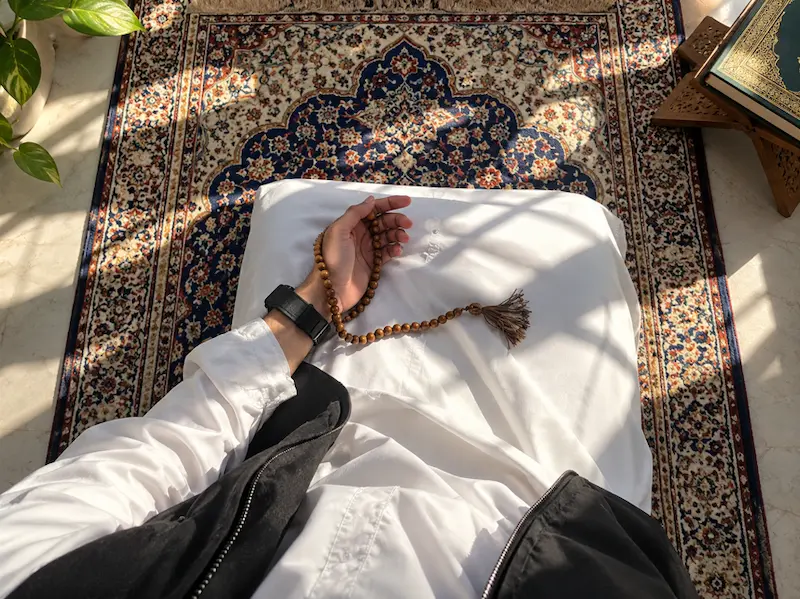
Adults
For adults, we go faster and explain the reason behind each rule. Nobody else hears you, so there’s no pressure.
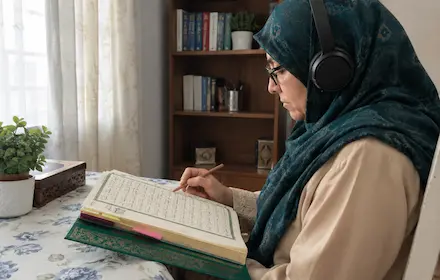
Sisters and girls
If you’d feel more comfortable with a female teacher, just ask. Sisters and girls are matched with one every time.
What will you learn in Noorani Qaida?
You’ll learn the 29 Arabic letters and their sounds, how letters join into words, and how vowel marks change a sound. Later lessons add Tanween, Madd, Sukoon, Tashdeed and simple Tajweed rules. Most books have 16 to 17 lessons, and each one builds on the last.
Stage
What you learn
In plain words
1. Single letters (Huroof Mufradat)
What you learn
The 29 letters, their names and sounds, and where each sound comes from in the mouth or throat
In plain words
The Arabic alphabet
2. Joined letters (Huroof Murakkabat)
What you learn
How a letter changes shape at the start, middle and end of a word
In plain words
How letters connect into words
3. Opening letters (Muqattaat)
What you learn
How the separate letters at the start of some surahs are read
In plain words
Reading letters one by one
4. Short vowels (Harakat)
What you learn
Fatha, Kasra and Damma
In plain words
The small marks that tell you how to say a letter
5. Tanween
What you learn
Double Fatha, Kasra and Damma at the end of a word
In plain words
An extra “n” sound at the end of a word
6. Long vowels (Madd) and Leen letters
What you learn
How long to stretch a sound, and the soft letters
In plain words
How long to hold a sound
7. Sukoon and Qalqalah
What you learn
Letters with no vowel, and the light bounce on five letters
In plain words
A “no vowel” mark and a gentle echo sound
8. Tashdeed and Ghunna
What you learn
Doubled letters and the soft nasal sound
In plain words
Saying a letter with extra force, and a sound that comes through the nose
9. Noon Sakinah, Meem Sakinah and stopping (Waqf)
What you learn
Basic rules for Noon and Meem, and how to stop at the end of a verse
In plain words
Your first real Tajweed rules
10. Guided reading
What you learn
Reading full words, then short verses with your teacher
In plain words
Putting it all together
Different editions order the lessons a little differently. Your teacher follows the book you already own, or shares ours on screen.
Noorani Qaida course at a glance
Level
Complete beginner
Age
From about 4 years old, and adults too
Class type
Live video, one student and one teacher
Class length
30 minutes for children, 45 or 60 minutes for adults
Classes per week
2 to 5, your choice
Teacher
Male or female, your choice
Language
English, with Urdu or Arabic when needed
You need
Laptop or tablet, internet, headphones and a Qaida book or our free PDF
Typical time
3 to 6 months
Certificate
Yes, when you finish the course level
Trial
Free 30 minute class
How does an online Noorani Qaida class work?
You meet your teacher on a video call, and the two of you read from the same page. The teacher points to each letter, listens to you say it, and corrects you right away. Then they set a small practice task. Most classes last 30 minutes.
Here’s what a typical class looks like:
5 minutes
review the last lesson
15 minutes
learn the new letters or rule
7 minutes
read aloud while the teacher listens
3 minutes
practice task and questions
You need a laptop or tablet, steady internet, headphones and a quiet corner. Younger children do best with a parent nearby for the first few weeks.
To begin, follow four steps:
1
Book a free trial.
The form takes about two minutes.
2
Meet your teacher.
In the trial class, you read a few letters and the teacher finds your level.
3
Get matched and pick your times.
We schedule in Eastern, Central, Mountain and Pacific time.
4
Start your lessons.
You get a short test and a progress report every month.
What age can a child start Noorani Qaida?
Most children are ready between ages 4 and 7. A child is ready when they can sit for about 15 minutes, copy sounds and follow simple directions. Older kids can start too, and many catch up fast. If your child isn’t quite ready, it’s fine to wait a few months.
4–7
years old: the age most children are ready
Signs your child is ready:
✓
They can repeat a new sound after you
✓
They stay interested for 10 to 15 minutes
✓
They like looking at books and letters
✓
They follow simple instructions from a teacher
How long does it take to learn Noorani Qaida?
Most students finish Noorani Qaida in three to six months with regular classes and daily practice. Adults who practice every day sometimes finish in one to three months. Young children may need six months or more. Your pace depends on age, how often you practice and how much Arabic you know.
Two classes a week usually means the longer end. Four or five classes a week usually means the shorter end.
Speed isn’t the goal. A student who finishes in four months but still mixes up two letters isn’t ready to move on. Your teacher moves you forward only when each page is clean.
Adults who practice every day
1 to 3 months
Most students
3 to 6 months
Young children
6 months or more
Where can you find a Qaidah Nooraniyah PDF?
You can download our free Noorani Qaida practice PDF below. A PDF is handy for practice between classes, but it can’t hear you or fix your mistakes. Many free PDFs online are blurry scans with missing pages, so pick one that’s clear and complete. Use it alongside a live teacher, not instead of one.
Download the Free Noorani Qaida PDF →Make the most of your PDF:
1
Read each line out loud, not silently
2
Point to every letter as you say it
3
Repeat the same page five times before you move on
4
Record yourself, then play it back and listen for mistakes
How can you learn Noorani Qaida faster?
Practice ten to fifteen minutes every day, read out loud, and don’t move to the next page until the current one is smooth. Short daily practice works better than one long session a week. A parent or friend listening also helps.
Mistakes to avoid:
✕
Rushing to the next page because the book is thin
✕
Reading silently, so nobody hears the errors
✕
Skipping the point where each sound comes from in the mouth
✕
Practicing with the TV on or a phone nearby
✕
Taking a long break and not revising old pages
Is a live teacher better than a Qaida app or video?
For most beginners, yes. Apps work well for extra practice between classes.
Live teacher
A live teacher catches small errors, like mixing up two similar letters, the moment they happen.
App or video
Apps and videos can show you the sounds, but they can’t hear yours.
Many English speakers say the letters Thaa and Seen the same way without noticing. A teacher hears it right away. A video never will.
What comes after Noorani Qaida?
Most students move on to Quran reading, where they read real verses with a teacher. Tajweed comes next, then Hifz or Tafseer if they want. Your teacher tells you when you’re ready, usually when you read Qaida pages smoothly without stopping to sound out each letter.
The usual next steps
Quran reading
Tajweed
Hifz or Tafseer
What makes our Noorani Qaida course different?
Private lessons
One student, one teacher, so no one gets lost in a group.
Tajweed from the first class
Your teacher fixes pronunciation early, so you don’t build habits you’ll need to undo.
Certified teachers
Each one holds ijazah or equal training and is screened by our team.
Male or female teacher
Your choice of a male or female teacher.
Backup teacher
A backup teacher if yours is away, so you don’t lose a week.
Monthly progress
A short test and a written progress report every month.
Flexible times
Classes from early morning to late evening, weekends included.
$40–$110
a month, in US dollars
How much do Noorani Qaida classes cost?
Our plans run from about $40 to $110 a month, in US dollars. The price depends on how many 30 minute classes you take each week. Siblings can share a schedule, so ask about family pricing. You’ll see the full price before you pay.
Noorani Qaida questions
How many lessons are in Noorani Qaida?
Most editions have 16 or 17 lessons. The count changes a little between editions, but the topics are the same.
Can I learn Noorani Qaida online without a teacher?
You can try, but it’s hard to know if you’re saying the sounds correctly. Many students who start alone repeat the same mistakes for months. A few live classes fix this much faster.
Do I need to finish Noorani Qaida before reading the Quran?
Yes, if you’re a complete beginner. It gives you the letters, sounds and joining rules you need. If you already read Arabic, your teacher will check your level in the free trial and may start you later in the book.
What’s the difference between Noorani Qaida and Madani Qaida?
Both are beginner books that teach the same basics: letters, vowels and joining. The layout and lesson order differ a little. We teach Noorani Qaida, and we can adjust if your child has already started another book.
What if my child gets bored or restless?
Tell the teacher. They can add short breaks, games and more repeat after me practice. A parent sitting nearby for the first few weeks helps a lot. Most children settle in within a few classes.
Which language are the classes in?
Classes are in English. Teachers can explain a tricky point in Urdu or Arabic when a student needs it.
Is the first class really free?
Yes. The 30 minute trial costs nothing, and you don’t need a card.
Your first lesson is free
Ready to start? Book a free trial class and your teacher will find the right page for you.
Book Your Free Trial Class →