
Quran courses
Learn the Quran Online with Live Private Teachers
You can learn to read, recite and memorize the Quran from home with a teacher who sees and hears you in every class. At The Sanad Academy, each lesson is one student with one certified teacher over video, at a time that suits your time zone anywhere in the USA. Your first 30 minute trial class is free.
Your first 30 minute trial is free.
Read
Recite
Memorize
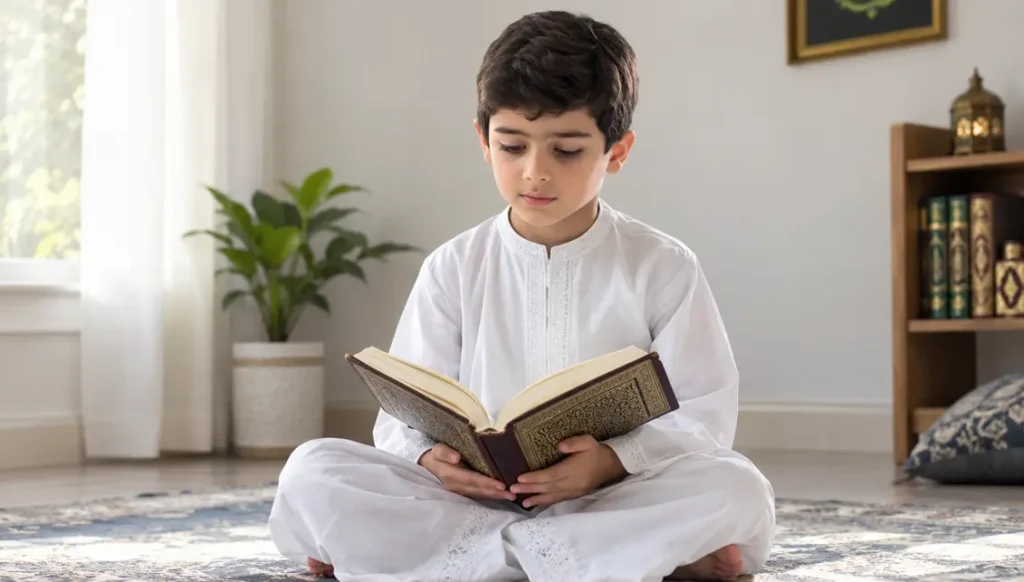

1 on 1
One student, one certified teacher, over video.
How does learning the Quran online work?
You book a free trial, meet a certified teacher on video and read a few lines so they can hear your level. They suggest a course and a weekly schedule. After that you attend two to five live classes a week, and every month you get a short test and a written progress report.
What happens in a typical class?
A class follows a simple rhythm. You revise what you learned last time, then move to the new lesson. You read aloud while your teacher corrects you on the spot. You finish with a small task to practice before the next class.
Revise
New lesson
Read aloud
Practice task
What do you need at home?
A laptop or tablet, steady internet, headphones and a quiet corner. A printed Quran helps, though your teacher can also share pages on screen.
Which time zones do you teach in?
We schedule classes in Eastern, Central, Mountain and Pacific time. Slots run from early morning to late evening, weekends included.
Eastern
Central
Mountain
Pacific
What is the learning path from beginner to advanced?
Most students move through five stages. You don’t have to complete them all. Your teacher sets the order based on your level and goals.
Stage
Course
You’re ready when
Typical time
1. Foundation
Course
Noorani Qaida
You’re ready when
You can’t read Arabic letters yet
Typical time
2 to 4 months
2. Reading
Course
Quran Reading (Nazra)
You’re ready when
You know the letters but read slowly
Typical time
6 to 12 months
3. Precision
Course
Tajweed
You’re ready when
You can read and want clean pronunciation
Typical time
6 to 12 months
4. Depth
Course
Hifz or Tafseer
You’re ready when
You read smoothly with Tajweed
Typical time
Hifz: 2 to 5 years. Tafseer: you set the pace
5. Mastery
Course
Ten Qirat or Ijazah
You’re ready when
You recite with strong Tajweed, or you’ve finished Hifz
Typical time
Ten Qirat depends on your level. Ijazah: 1 to 3 years or more
Times are rough estimates. They change with age, practice and where you start.
Tajweed isn’t a stage you wait for. Your teacher fixes your pronunciation from the first class so you never build habits you’ll have to undo. The separate Tajweed course then covers the rules in depth.
Want details on a course?
How long does it take to learn the Quran online?
Most beginners start reading Arabic in a few months and read smoothly within a year. Memorizing the full Quran usually takes two to five years. Ten minutes of practice every day beats one long session a week.
A few
months
Start reading Arabic
1 year
or less
Read smoothly
2–5
years
Memorize the full Quran
10 min
every day
Beats one long session a week
These ranges aren’t promises. Young children sometimes need a little longer on Qaida, and adults who practice daily can finish it faster. After your trial, your teacher gives you a clearer estimate.
Is online Quran learning as good as a mosque or local class?
For most families, yes, as long as the class is live and one on one. Your teacher hears every word and corrects it right away.
You lose the room, not the attention.
There’s no commute either, and you can pick a male or female teacher. If your child likes group time, a local class can sit alongside online lessons.
Who learns with us?

Children
Young learners do best with short classes, a calm teacher and a parent nearby for the first few weeks. They need to sit for about 15 minutes, which most manage by age 4 to 6.
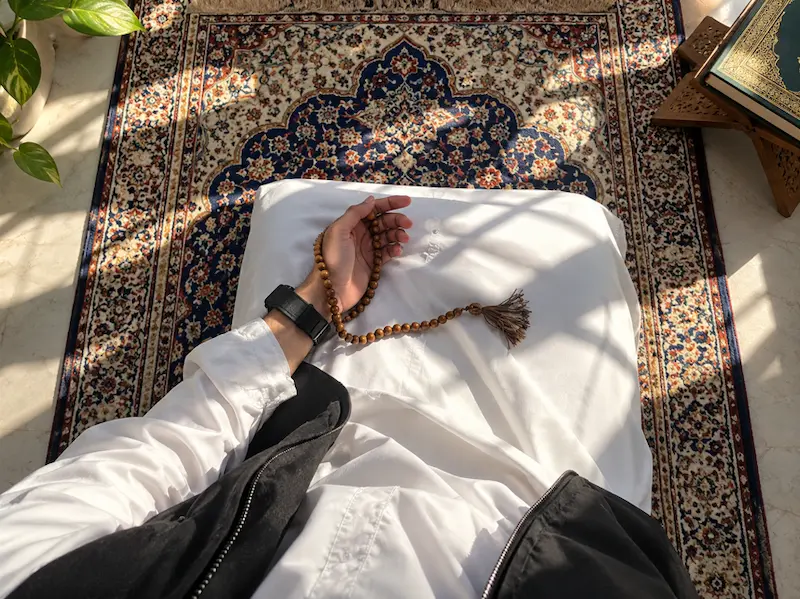
Adults and busy professionals
Evening and weekend slots make it easier to fit classes around work. Adult lessons run 45 or 60 minutes. Ten to fifteen minutes of practice a day is enough to keep moving.
Sisters
Female teachers are available for women and girls. Choose one when you sign up.
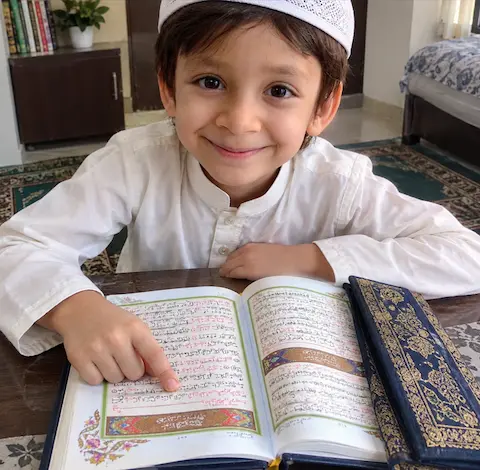
Returning learners
Maybe you read the Quran as a child and stopped. Your teacher listens, finds the gaps and rebuilds from there. Many returning learners are surprised how quickly it comes back.
How do you judge an online Quran academy before you pay?
Ask five questions.
We’d rather you ask these of us too. Our trial answers most of them in 30 minutes.
1
Is the trial class live with a real teacher, or just a recorded demo?
2
Does the teacher hold an ijazah or equal training?
3
Is the class truly one on one?
4
Will you get a written progress report, not just a pat on the back?
5
Can you see the full price before you pay?
What makes our Quran classes different?
01
Private lessons
One student, one teacher.
02
Certified teachers
Each holds an ijazah or equal training and is screened by our team.
03
Male or female teacher
Your choice of a male or female teacher.
04
Backup teacher
A backup teacher if yours is away, so you don’t lose a week.
05
Monthly progress
A short test and a written progress report every month.
06
Flexible times
Classes from early morning to late evening, weekends included.
$40–$110
a month, in US dollars
How much do online Quran classes cost?
Our plans run from about $40 to $110 a month, in US dollars. The price depends on how many classes you take each week and how long each class is. You’ll see the full price before you pay.
Mistakes to avoid when choosing a Quran course
✕
Skipping Qaida because a child already knows a few letters. Weak basics cause trouble later.
✕
Starting Hifz before reading is smooth.
✕
Putting a beginner in a big group class where nobody hears their mistakes.
✕
Signing up with an academy that doesn’t offer a live trial.
✕
Practicing only on class day. Short daily practice matters more than long weekly sessions.
Frequently asked questions
Which course should a complete beginner take?
Start with Noorani Qaida. It teaches the letters, their sounds and how to join them. Your teacher confirms this in the free trial.
What’s the difference between Nazra and Hifz?
Nazra means reading the Quran from the page. Hifz means memorizing it by heart. Most students learn to read well first, then decide whether to memorize.
Do I need to take Tajweed as a separate course?
Not at the start. Your teacher corrects your pronunciation from the first class. Take the separate course when you want to learn the rules in detail.
Can adults memorize the Quran?
Yes. It can take longer than it does for children and it needs steady daily revision. We begin with short surahs and a plan that fits your week.
How many classes a week should I take?
Most students take two to five. If you’re new, two or three classes a week is a comfortable start. Your teacher can raise the number as you settle in.
What happens if my teacher is away?
We assign a backup teacher so you don’t miss a week of lessons.
Can a parent sit in on the class?
Yes, and for young children it’s a good idea in the first few weeks. A parent nearby can also help with practice between classes.
Your first lesson is free
Not sure which course fits? Book a free trial class and your teacher will help you choose.
Book Your Free Trial Class →